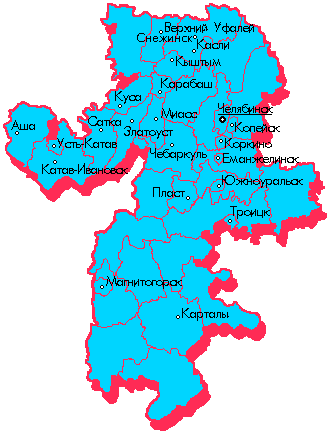
В области 27 городов и около 300 населенных пунктов, 24 административных района.
Главные города в 1994 г., тыс.чел.:
Челябинск - 1150,9
Магнитогороск - 439,6
Златоуст - 208,2
Миасс - 184,8
Копейск - 145,8
Население, тыс.чел. (доля в России, %)
1989 г. (перепись) - 3624 (2,46)
1993 г. (оценка) - 3634 (2,44)
1995 г. (оценка) - 3699,8 (2,49).
Горожане - 3007,4 тыс.чел. (81,3%, в среднем по России - 73,0%)
Сельские жители - 692,4 тыс. чел.
Индустриально развитая Челябинская область по объему промышленного производства занимает 5-е место в России уступая только Москве, Санкт-Петербургу, Московской и Свердловской областям. В разностороннем хозяйственном комплексе области ведущую роль играют черная металлургия и машиностроение.
Имея уникальные природные ресурсы (многокомпонентные руды, редкие металлы, камнесамоцветное сырье, вторичные ископаемые), развитую транспортную сеть, удачное расположение в центре страны, область активно развивает свои хозяйственные связи. Более 3/4 продукции ведущих предприятий поступает в межрайонный обмен.